You maintain a flat roof to prevent leaks in West Hills, California by inspecting it twice a year, keeping drains and scuppers clear, repairing blisters and seam failures early, and recoating the membrane on a cycle suited to the membrane. The single biggest cause of leaks on low-slope roofs here is standing water that sits for more than 48 hours after a storm. Everything below is a routine for homes and commercial buildings across the west San Fernando Valley.
This post walks through what actually fails on a flat roof in this climate, a season-by-season checklist, how often to inspect, when coating makes sense, and the mistakes that turn a small repair into a large replacement. If you take one thing from this post, make it this: flat roofs do not fail suddenly. They fail slowly, in places you can see if you know where to look.
Why flat roofs leak in West Hills
Flat roofs in West Hills leak because heat, UV, and thermal cycling break down the membrane faster here than in cooler coastal areas. Summer surface temperatures on a dark modified bitumen or TPO roof run very high in direct sun. When the roof cools at night, the membrane contracts. Repeated cycles over the seasons open seams, flashings, and penetrations.
The second factor is water that cannot leave. West Hills sits in a bowl of hills where afternoon winds push debris onto roofs, and the rainy season brings about 14 to 16 inches of rain a year, mostly between November and March. A roof that drains quickly in July can pond for days in January once leaves and grit clog the drains.
Flat roof maintenance in West Hills is not complicated, but it is specific to this climate. The failures seen most often are:
- Open seams on modified bitumen where the overlap has lifted.
- Blisters, bubbles between membrane layers where moisture is trapped and expanding.
- Ponding water deeper than a quarter inch that sits 48 hours after rain stops.
- Failed flashings at walls, vents, and HVAC curbs where sealant has dried and cracked.
- Clogged drains and scuppers packed with leaves, tennis balls, and roofing gravel.
If you own a low-slope roof and want a baseline assessment before the winter rains, our roof inspection in West Hills, California covers all five of those failure points and includes photos of anything found.
Flat roof maintenance checklist West Hills CA
A flat roof maintenance checklist in West Hills, California that homeowners can run themselves takes about 45 minutes twice a year. Do the walkthrough in October before the rainy season and again in April after it ends. Wear soft-soled shoes, never walk a roof alone, and stay off it when it is wet or very hot.
- Clear the drains and scuppers. Remove leaves, twigs, and gravel by hand. Flush with a garden hose and confirm water disappears promptly.
- Look for ponding. After the first real rain, check the roof within 48 hours. Any water still sitting more than a quarter inch deep is a drainage problem, not a roofing problem.
- Inspect seams and flashings. Run your hand along every seam. If the edge lifts, it needs resealing before the next storm.
- Check penetrations. Vents, HVAC curbs, skylights, and chimney flashings are where most leaks start. Look for cracked sealant or rusted fasteners.
- Look for blisters and splits. A blister the size of a dinner plate will grow. A split longer than 6 inches needs a patch now.
- Clear debris from the roof surface. Palm fronds, eucalyptus leaves, and the occasional soccer ball all block drainage.
- Check the interior ceiling. From inside, look for water stains, bubbling paint, or a musty smell in the attic. These show up before the leak reaches your living room.
If you would rather hand the checklist to someone who does it regularly, our roof maintenance in West Hills, California program includes two visits a year, drain clearing, seam inspection, and a written report with photos.
How often should a flat roof be inspected in West Hills CA?
A flat roof in West Hills should be inspected twice a year, once in October before the rainy season and once in April after it, plus after any significant wind event. That is the minimum. If your roof is more than 12 years old, or if you have had any leak in the past three years, move to three inspections per year.
Here is why twice a year matters in this specific climate. West Hills gets most of its rain in a four-month window. A small seam failure in September is a small repair. The same failure in February, after weeks of rain, is an interior repair plus a roof patch. The inspection is the cheap part.
Between professional visits, do a quick visual from the ground once a month. You can spot a lot from a ladder at the roof edge: sagging, debris piles, or water stains on the fascia. If you see any of those, get someone on the roof sooner rather than later.
Flat roof coating for leaks West Hills CA
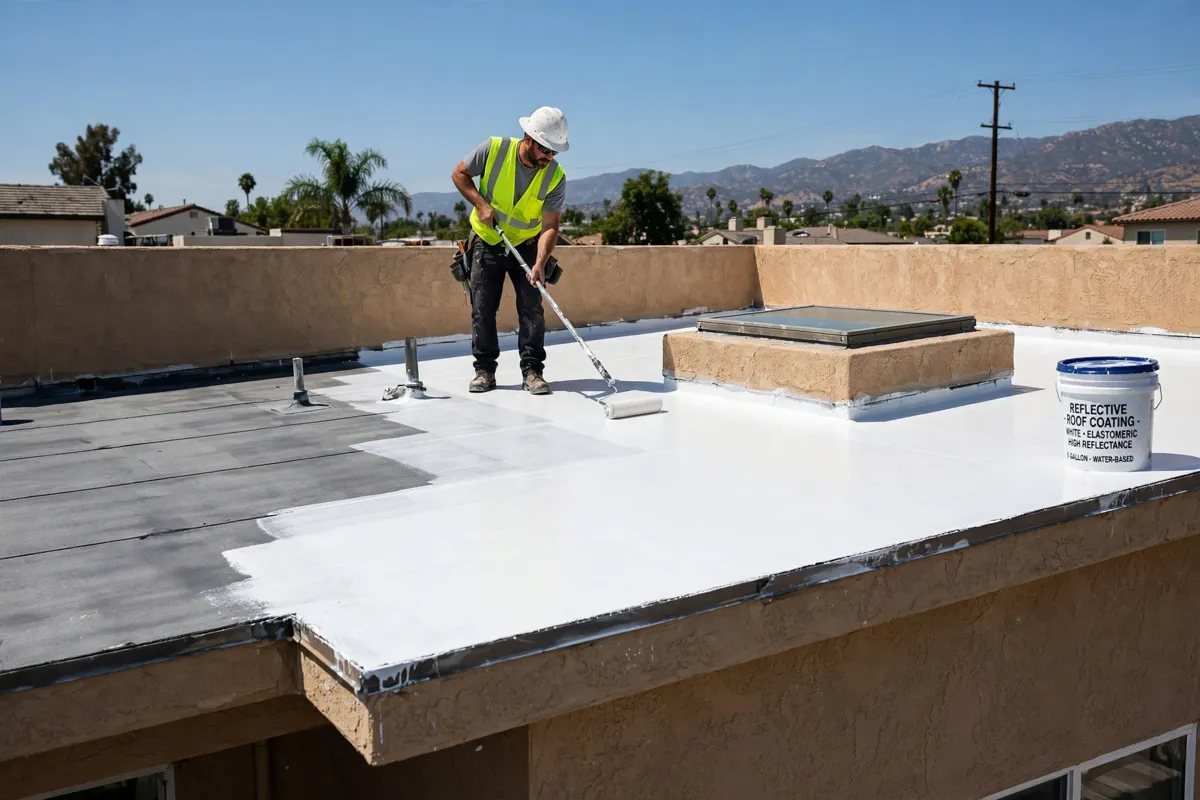
Flat roof coating for leaks in West Hills, California works when the membrane is still sound but the surface has aged. It is a maintenance step, not a repair for active leaks. A silicone or acrylic elastomeric coating adds a seamless, UV-resistant layer that reflects heat and seals pinholes and hairline cracks. It will not fix a blister, a split, or a failed seam. Those get repaired first.
Ask for a written figure for your roof. A coating can add years of life when it is applied over a properly prepped surface.
What goes wrong: homeowners roll on a cheap bucket of coating from a big-box store over a dirty, wet roof. It peels within a year. Coating needs a clean, dry, sound substrate, and it needs to go on at the manufacturer's specified thickness. Our roof coating in West Hills, California service includes surface prep and primer where needed. Ask what coating terms are offered, in writing, before work starts.
Coating is also the right move when you are trying to defer a replacement by several years. If the membrane is already at the end of its life, brittle, cracked all the way through, or patched across a large share of its surface, coating is money down the drain. Replace it.
Flat roof drainage maintenance West Hills California
Flat roof drainage maintenance in West Hills, California is the single highest-return task on this list. Water is the enemy. Move it off the roof fast and most leak problems never start.
There are three drainage systems on most West Hills flat roofs: interior drains, scuppers through the parapet wall, and gutters with downspouts. Each one clogs differently.
- Interior drains collect leaves and grit at the strainer. Pull the strainer twice a year and flush the leader pipe with a hose.
- Scuppers clog with palm fronds and roof gravel. Clear them by hand, never with a pressure washer, which can damage the flashing.
- Gutters and downspouts fill with eucalyptus leaves and shingle grit. If water runs over the edge during a storm, they are already blocked.
If your gutters overflow every winter, our gutter cleaning in West Hills, California service clears the full run and checks that downspouts discharge at least 6 feet away from the foundation. Water dumped at the base of the wall finds its way into the house eventually.
One more drainage note: if your roof ponds in the same spot every year, the fix is not more coating. It is adding a drain, re-pitching a low section, or installing a tapered insulation board. That is a roofing repair, not a maintenance item.
Common mistakes that cause flat roof leaks
The most common mistake is waiting for a leak to show up inside the house before doing anything. By the time water stains the ceiling, the leak has been active for weeks or months. The roof deck is already wet, and the repair is many times more expensive than it would have been.
Other mistakes that cost West Hills homeowners real money:
- Walking the roof in summer shoes. Cleats and hard soles puncture modified bitumen and TPO. Use soft-soled shoes or stay off.
- Power washing the membrane. It strips the protective coating and drives water into seams. Use a garden hose and a soft brush.
- Patching with the wrong material. Asphalt patching cement does not bond to TPO or EPDM. The patch peels off in one season.
- Ignoring small blisters. A blister the size of your hand becomes a large delamination in two summers.
- Letting trees overhang the roof. A ficus or eucalyptus within 10 feet drops leaves and branches that clog drains and abrade the membrane.
- Stacking stuff on the roof. Storage, planters, and satellite dishes trap moisture and create ponding.
- Skipping the interior check. Attic stains and musty smells are early warnings. Look for them every few months.
If you are not sure whether a spot on your roof is a maintenance item or a repair, get it looked at. A short inspection is cheaper than a new ceiling.
When to call a professional
Call a professional when you see ponding that lasts more than 48 hours, a blister larger than a dinner plate, a seam that has lifted, or any water stain on an interior ceiling. Those are not DIY items. Neither is anything involving a ladder above one story, a steep pitch transition, or electrical equipment on the roof.
Generation Roofing handles flat roof maintenance across West Hills and the surrounding San Fernando Valley. The job should find the problem, fix it, and test the repair with water before closing. If the roof needs more than maintenance, such as a section replacement, a new drain, or a full re-roof, that should be stated straight, with a written scope before any work starts.
Generation Roofing also handles the roofing work that goes with flat roofs: flat roofing in West Hills, California for new installations and replacements, and roof leak repair in West Hills, California when water is already getting in.
Frequently Asked Questions
How do I maintain a flat roof in West Hills California?
Inspect it twice a year, in October and April, clear all drains and scuppers, check seams and flashings for lifting, repair blisters and splits promptly, and recoat the membrane on a cycle suited to the membrane. Keep trees trimmed back at least 10 feet from the roof edge.
How often should a flat roof be inspected in West Hills CA?
Twice a year minimum, plus after any significant wind event. If your roof is over 12 years old or has leaked before, inspect three times a year. West Hills gets most of its rain between November and March.
Can flat roof leaks be prevented in West Hills California?
Most can. Most of the leaks seen start at drains, seams, or flashings, all of which are maintenance items. Keeping water moving off the roof and sealing small failures early prevents the vast majority of leaks.
What causes flat roof leaks in West Hills CA?
Standing water is the leading cause, followed by UV and thermal cycling that opens seams, failed sealant at penetrations, and clogged drains. Summer surface heat accelerates membrane breakdown here faster than on the coast.
Does flat roof coating prevent leaks in West Hills California?
Coating prevents leaks from pinholes, hairline cracks, and UV degradation, and it extends roof life by years when applied over a properly prepped surface. It does not fix active leaks, blisters, or failed seams. Those need repair first. No coating figure is quoted here.
Get help with Roofing in West Hills
If you want your flat roof inspected, cleaned, and sealed before the winter rains hit in West Hills, a maintenance visit is the step to book. Generation Roofing serves homeowners and commercial property owners across West Hills and the west Valley.
Call us at +1 747-335-3331 to schedule a flat roof inspection or maintenance visit. A written scope should set out what the roof needs, and what it does not. Generation Roofing, 6711 Vicky Ave, West Hills, CA 91307.